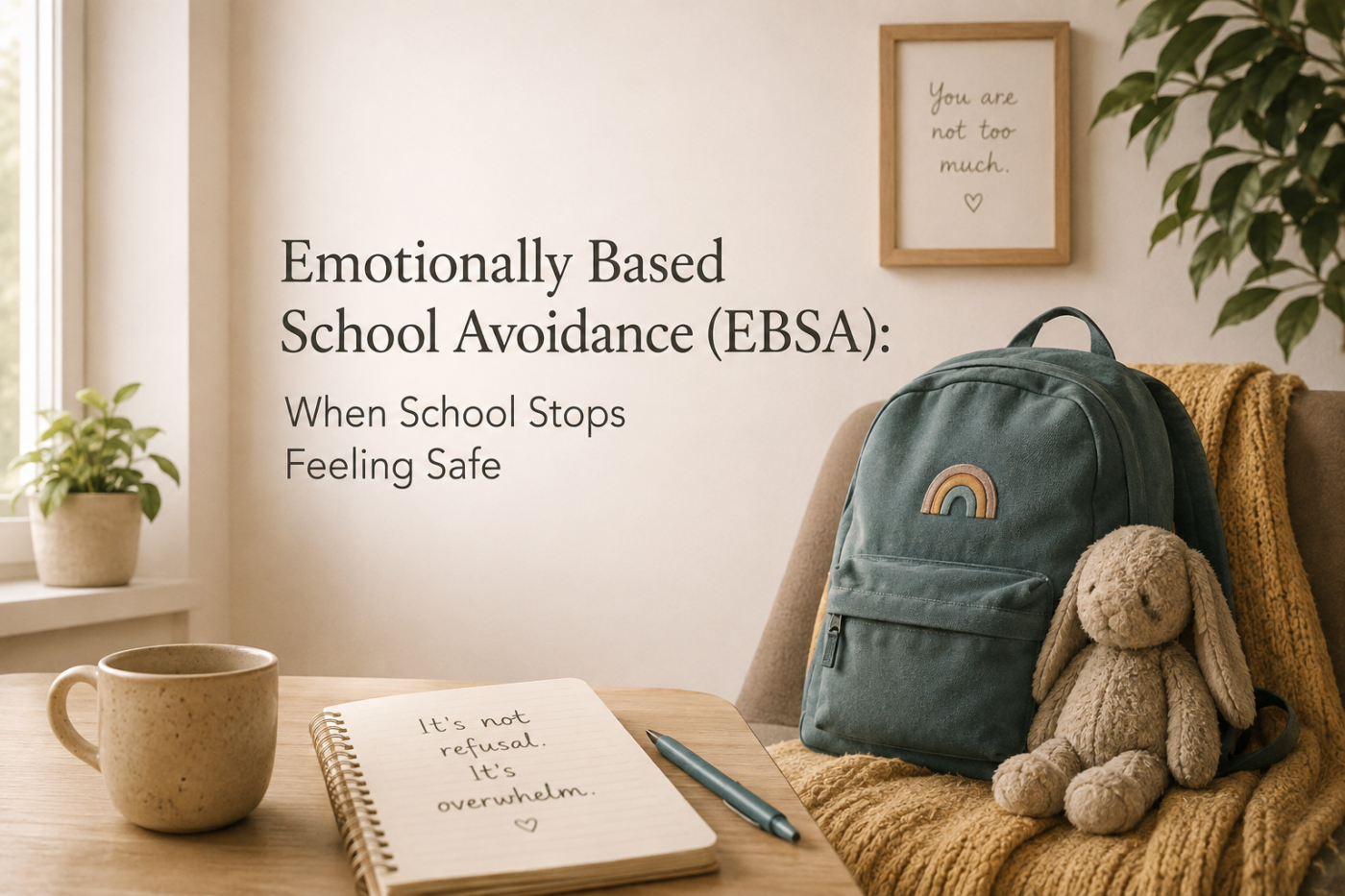
Emotionally Based School Avoidance (EBSA): When School Stops Feeling Safe
“My child used to love school… now they cry every morning.”
“We’ve tried rewards, consequences, reassurance, everything. Nothing works.”
“People think they’re just being difficult, but I know something deeper is going on.”
Emotionally Based School Avoidance (EBSA), sometimes called school refusal or school-related distress, isn’t about laziness, defiance or poor parenting. It’s usually a sign that a child or young person is overwhelmed and that attending school has become emotionally unsafe for them.
As a psychotherapist specialising in trauma and neurodivergence, I often work with families who have reached breaking point. Many have spent months trying to “fix” school attendance before anyone has stopped to ask the most important question:
What is this child’s nervous system trying to tell us?
What is Emotionally Based School Avoidance?
EBSA describes a situation where a child experiences significant emotional distress about attending school.
This might look like:
- Refusing to leave the house
- Panic attacks before school
- Complaining of stomach aches, headaches or feeling sick
- Becoming withdrawn or tearful
- Explosive meltdowns during the morning routine
- High anxiety on Sunday evenings
- Coping at school but completely crashing afterwards
For some children, the distress builds gradually over months. For others, it appears suddenly after a difficult experience or major life change.
The common thread is that school no longer feels emotionally manageable.
It’s Rarely “Just Anxiety”
Parents are often told their child simply has anxiety.
While anxiety is certainly present, it’s usually a symptom rather than the whole explanation.
Children avoid school because something about the environment feels threatening to their nervous system.
This could include:
- Sensory overwhelm
- Social exhaustion
- Bullying or feeling misunderstood
- Academic pressure
- Perfectionism
- Separation anxiety
- Trauma
- Burnout
- Feeling constantly different from peers
Until we understand why school feels unsafe, simply encouraging attendance often makes things worse.
EBSA and Neurodivergence
Many children experiencing EBSA are autistic, ADHD or AuDHD, although not all.
Neurodivergent children may be working incredibly hard to mask throughout the school day. By the time they get home, they have nothing left.
What adults sometimes see as “school refusal” may actually be:
- autistic burnout
- chronic nervous system overload
- sensory fatigue
- demand overwhelm
- repeated experiences of misunderstanding or rejection
The goal is not to force children to tolerate environments that continually overwhelm them, but to understand what they need in order to feel safe enough to learn.
Why Punishment Usually Doesn’t Work
When children are distressed, their nervous system shifts into survival mode.
In this state, the brain is focused on protection rather than learning, reasoning or following instructions.
Rewards, consequences or increased pressure often fail because they don’t address the underlying distress.
In fact, children frequently tell me they already feel guilty, ashamed and worried about missing school.
Adding more pressure simply increases that emotional burden.
How Therapy Can Help
Therapy isn’t about persuading children to return to school.
Instead, it creates a space where they can begin to understand what’s happening inside them.
Together we might explore:
- the sources of anxiety and overwhelm
- emotional regulation skills
- trauma or difficult experiences
- autistic or ADHD needs
- self-esteem and confidence
- coping with uncertainty
- relationships with peers and teachers
Alongside this, I often work with parents to help them understand their child’s nervous system, reduce conflict at home and develop practical, compassionate ways of supporting attendance where appropriate.
Supporting the Whole Family
EBSA can affect everyone in the family.
Parents often describe feeling exhausted, isolated and judged. Many feel trapped between wanting to protect their child and worrying about attendance, fines or involvement from school.
Supporting parents is an important part of the therapeutic process.
When adults feel calmer and more confident, children often begin to feel safer too.
There Isn’t a One-Size-Fits-All Solution
Every child’s experience is different.
For some, returning to school gradually with the right support is absolutely possible.
For others, adjustments, reduced timetables or alternative educational pathways may be needed for a period of time.
The aim shouldn’t simply be perfect attendance.
The aim is helping a child feel emotionally safe enough to engage with learning again.
Looking Beyond Behaviour
Perhaps the biggest shift is this:
Instead of asking,
“How do we get them back into school?”
we begin asking,
“What has made school feel impossible?”
That question opens the door to understanding, compassion and lasting change.
Looking for Support?
If your child is struggling with school attendance, you’re not alone.
I offer neurodiversity-affirming therapy for children, teenagers and parents, helping families understand the emotional reasons behind school avoidance and build practical strategies that support both wellbeing and learning.
If you’d like to find out more, you’re welcome to get in touch for an initial conversation.