
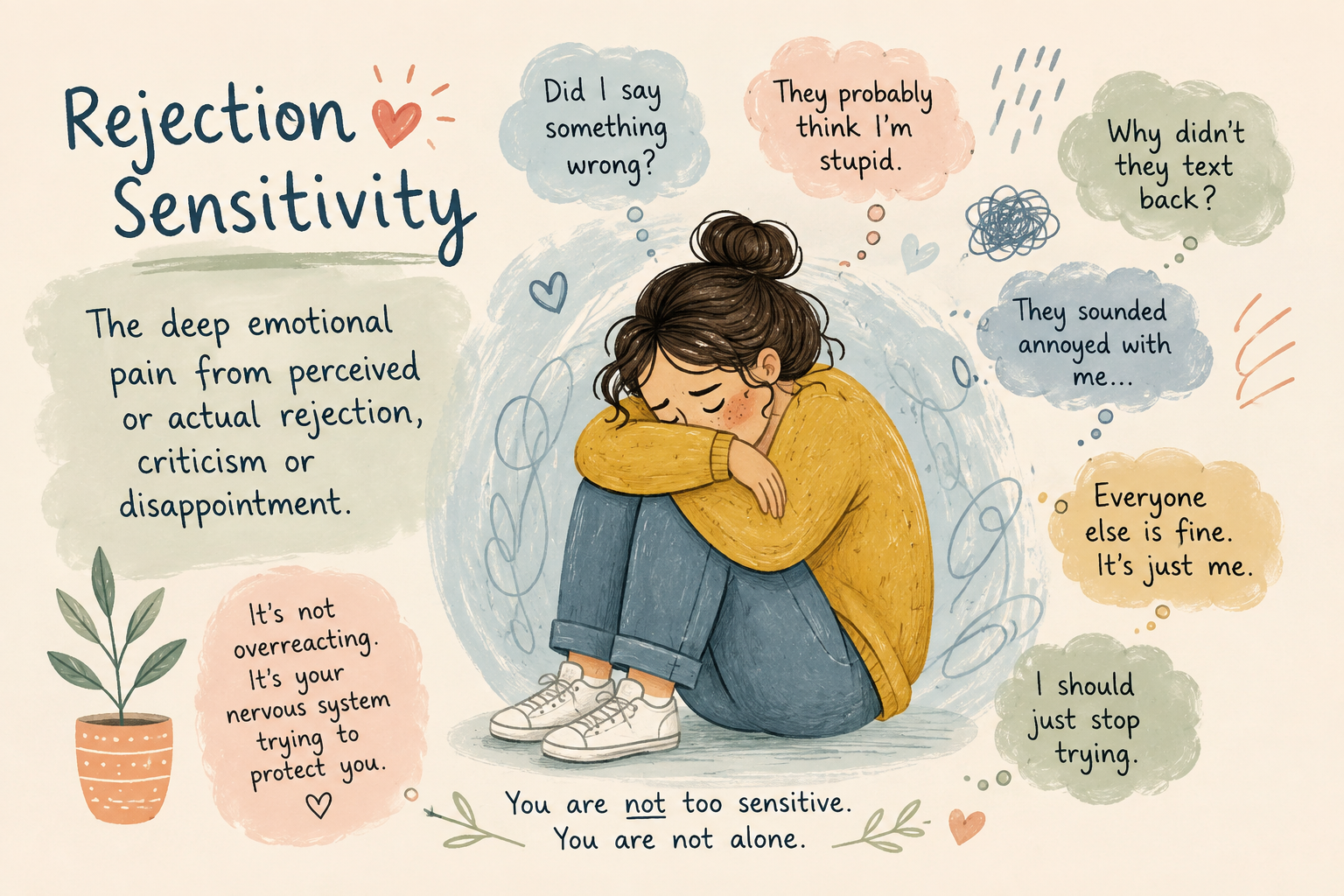
Rejection Sensitivity: Why Small Moments Can Feel So Painful
Have you ever found yourself replaying a conversation over and over, convinced you’ve upset someone? Perhaps a friend took a little longer than usual to reply to your message, a colleague seemed quieter than normal, or your partner didn’t respond in the way you expected. While someone else might shrug these moments off, you find yourself spiralling into self-doubt, embarrassment or shame.
If this sounds familiar, you’re certainly not alone.
For many people, particularly those with ADHD, autism or both (AuDHD), everyday experiences of perceived criticism or rejection can feel incredibly intense. These reactions are often described as rejection sensitivity, or sometimes Rejection Sensitive Dysphoria (RSD).
What is rejection sensitivity?
Rejection sensitivity refers to an increased emotional response to situations where we feel criticised, excluded, misunderstood or not good enough. Sometimes there has been an actual rejection, but often the pain comes from the possibility that we might have been rejected.
It can be triggered by things such as:
- A delayed reply to a message
- Constructive feedback at work
- Feeling left out of social plans
- Someone appearing distant or distracted
- A disagreement with a partner or friend
- Making a mistake or feeling you’ve disappointed someone
Although these situations may seem relatively minor on the surface, they can provoke powerful emotional reactions.
Why is it so common in ADHD and autism?
Many neurodivergent people grow up receiving repeated messages that they are “too much,” “too sensitive,” “lazy,” “difficult” or “not trying hard enough.”
Even when these messages aren’t spoken aloud, years of feeling different, misunderstood or struggling to meet expectations can gradually shape how someone sees themselves.
Over time, the brain can become highly alert to the possibility of rejection.
This doesn’t mean someone is “overreacting.” Rather, their nervous system has learned that relationships can feel unpredictable or unsafe, so it begins scanning for signs that history might repeat itself.
For autistic people, repeated experiences of masking, misunderstanding or social exclusion may contribute to this sensitivity. For people with ADHD, impulsivity, emotional intensity and years of negative feedback can have a similar effect. Many AuDHD adults describe experiencing both.
- What can rejection sensitivity feel like?
Everyone experiences it differently, but common experiences include:
- Intense shame after making a mistake
- Assuming others are angry or disappointed
- Overthinking conversations for hours or days
- Feeling physically sick after criticism
- Becoming tearful very quickly
- Pulling away from people before they can reject you
- Becoming defensive or angry when feeling criticised
- People-pleasing to avoid conflict
- Avoiding new opportunities through fear of failure
Often these reactions happen incredibly quickly, before we’ve had chance to think things through.
It’s not about being “too sensitive”
One of the most painful aspects of rejection sensitivity is believing there’s something wro
ng with you because you react so strongly.
In therapy, I often encourage people to become curious about these reactions rather than judging them.
Instead of asking:
“Why am I so sensitive?”
it can be more helpful to ask:
“What experiences has my nervous system learned from?”
This subtle shift moves us away from self-criticism and towards self-understanding.
How therapy can help
Therapy isn’t about teaching you not to care what other people think.
Relationships matter. Connection matters. Wanting acceptance is part of being human.
Instead, therapy can help you:
- recognise rejection sensitivity when it shows up
- understand where these patterns developed
- separate past experiences from present relationships
- develop greater self-compassion
- build confidence in expressing your needs
- become less overwhelmed by moments of uncertainty or criticism
Over time, many people notice they become less driven by fear of rejection and more able to respond from a place of confidence and self-worth.
You don’t have to face it alone
If you recognise yourself in this article, please know that you’re not broken or “t
oo much.”
Rejection sensitivity often develops for understandable reasons. With greater awareness, compassion and support, it is possible to feel more secure in yourself and your relationships.
Whether you’re exploring ADHD or autism, adjusting to a recent diagnosis, or simply finding relationships emotionally exhausting, therapy can provide a safe space to understand these patterns and begin responding to yourself with greater kindness.
If you’re looking for neurodiversity-affirming therapy in Brighton, Hove or online across the UK, I’d be happy to discuss how we might work together. Feel free to get in touch for an informal initial conversation.